
Common expenses between paydays
Between paydays, workers face expenses that do not wait for wages to arrive: housing, food, transport, schooling, healthcare and unexpected costs. The practical approach is to sort them by necessity, due date and whether payment can be delayed, rather than try to predict every expense.
Which expenses commonly arise between paydays?
Some monthly costs are fixed, some change weekly, and some are unexpected. Even when total income covers basic needs, spending before the next wage payment can cause a temporary cash shortage.
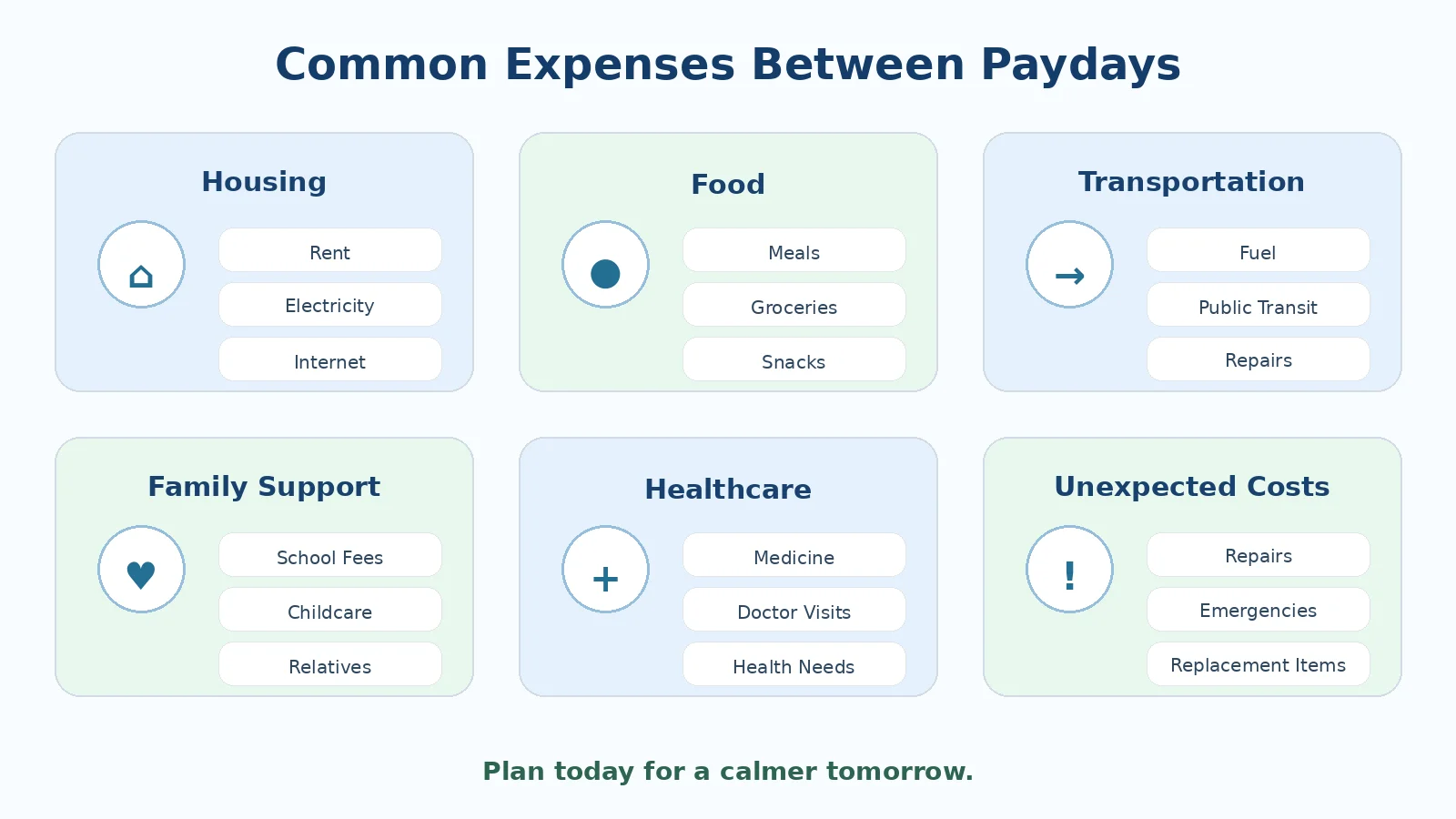
Six useful groups are:
- Housing: rent, electricity, water, internet and parking.
- Food: groceries, meals and everyday necessities.
- Transport: fuel, fares, repairs and commuting costs.
- Family: tuition, remittances, children and relatives.
- Healthcare: medicines, consultations and other care.
- Unexpected costs: broken household items or urgent family matters.
A discretionary purchase may wait; rent and the transport needed to work often cannot.
How should expenses be prioritized?
Ask three questions: Is it essential? When is it due? Can it wait?
| Priority | Characteristics | Examples |
|---|---|---|
| High | Direct effect on housing, health or ability to work | Rent, essential medicine, fuel |
| Medium | Important, but amount or timing may be adjustable | Phone, family support, some bills |
| Low | Can be delayed without immediate harm to essentials | Shopping, entertainment, upgrades |
This helps prevent less important purchases from consuming money needed for essentials. A complex budget is unnecessary: first identify bills that must be paid before the next payday.
Why does a payment calendar matter as much as the total budget?
A monthly budget shows how much is expected to be spent; a payment calendar shows when cash is needed. Rent might be due in week three while payday is at month-end. Having enough money for the month is different from having it at the right time.
List rent dates, grocery weeks, school fees, family transfers, expected healthcare and a buffer. This reveals heavy-spending weeks and helps set money aside earlier.
Planning cash flow between paydays
Divide the budget into weeks, setting aside fixed bills, living costs and a small reserve.
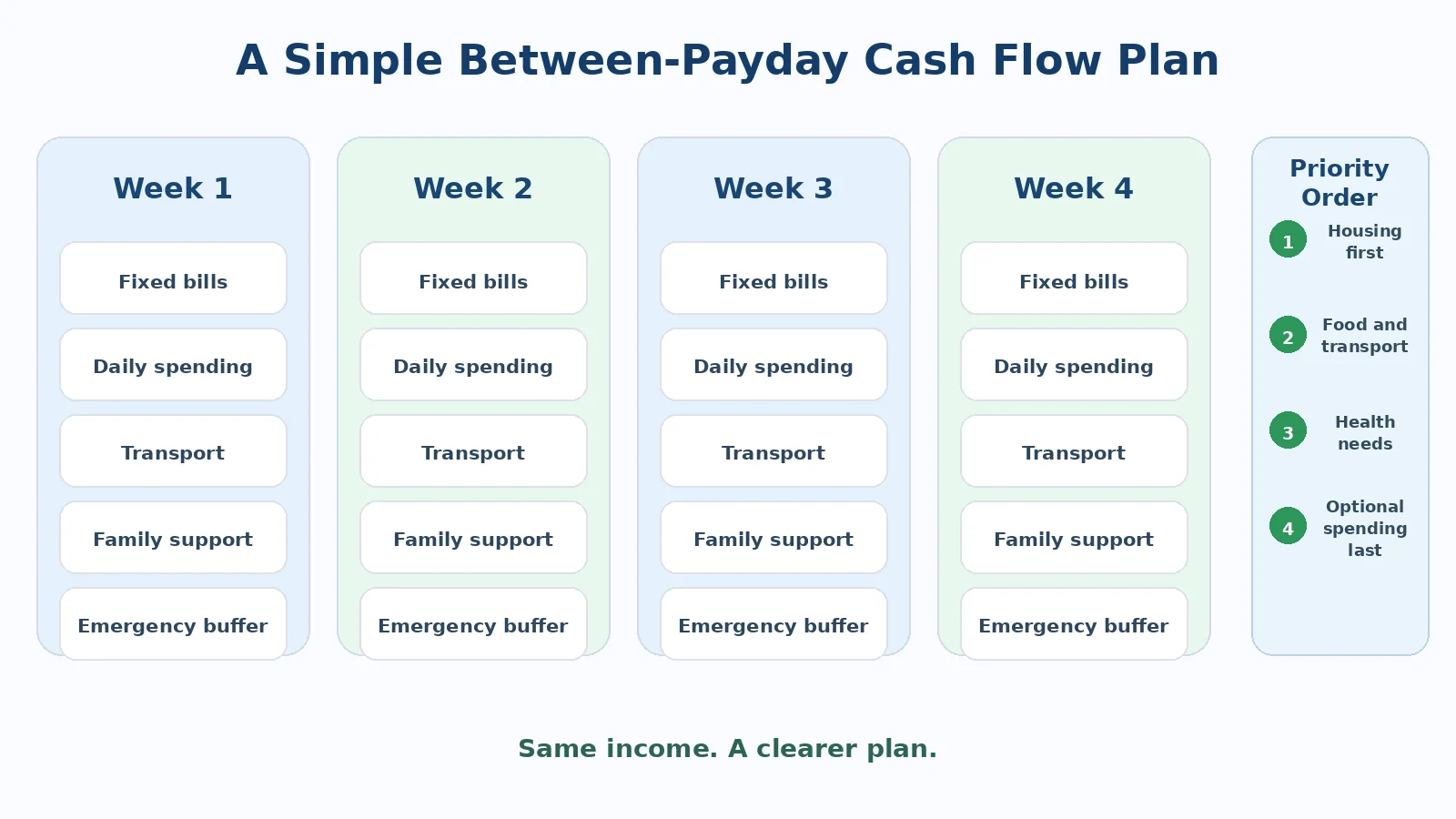
A simple order is:
- Set aside housing and mandatory bills.
- Allocate weekly food and transport money.
- Note family commitments in advance.
- Keep a small emergency amount.
- Spend on nonessentials after the above needs are covered.
The goal is to prevent a lower-priority purchase from disrupting basic needs, while leaving room for chosen leisure spending.
What should you do when an unexpected cost arises?
First check whether it must be addressed immediately. Ask whether payment can be split or postponed, use an emergency reserve if available, review flexible spending and check official support at work.
If the employer offers earned wage access and the worker qualifies, part of pay for completed and approved work may be available. Receiving it earlier does not increase total income for the period; it changes when part of earned income is accessible.
When can Nhan Kiet's earned wage access help?
It is most relevant to a timing gap: the worker has completed work that has been approved, but the scheduled payday is still ahead.
Available amount = (approved workdays × daily rate) − amounts already received in the period − the portion retained under employer policy.
Funds go to an account in the worker's name when program conditions are met. Treat the payment as early access to income earned, not new income. If shortages recur despite early access, recurring costs or obligations may be the cause; changing payment timing alone cannot solve that longer-term problem.
Conclusion
Expenses between paydays differ in amount, timing and urgency. Knowing what must be paid, what can wait and which weeks are demanding helps workers manage cash flow. Early access to approved earned pay may ease a temporary gap, but does not replace planning around the period's total income.
Author: Do Huy Le — General Director, Nhan Kiet Manpower Supply Co., Ltd.
Earned wage access advice for employers: Hotline 0937.022.655 · Email info@nhankiet.vn · Earned wage access for employers
FAQ
Which expenses should come first between paydays?
Prioritize housing, health, the ability to work and essential obligations. Consider shopping and entertainment afterward.
Must every small expense be recorded?
Not forever. Tracking a few weeks can show where money goes and which weeks are tight.
Must an emergency fund be large at the start?
No. A small but regularly maintained reserve is more useful than waiting to begin with a large amount.
Does receiving some earned pay early increase income?
No. It is part of pay linked to completed and approved work and appears in the corresponding payroll period.