
How Monthly, Daily, and Hourly Wages Differ: Understanding and Correct Application

How Monthly, Daily, and Hourly Wages Differ: Understanding and Correct Application
Short Answer: Monthly, daily, and hourly wages are all forms of time-based pay. They differ in the time unit used to determine wages: monthly, daily, or actual working hours. The wage unit does not necessarily equate to the payment period.
For example, a person receiving daily wages does not necessarily receive payment after each day. Parties can agree on lump-sum payments but must comply with the wage payment period limits of Article 97 of the 2019 Labor Code.
> Legal Note: This article is reviewed according to the Labor Code No. 45/2019/QH14 and Decree 145/2020/ND-CP dated 04/09/2026. Examples are for illustrative purposes only; actual calculations must be based on contracts, working days, working hours, regulations, and effective documents.
Legal Basis
- Labor Code No. 45/2019/QH14, especially Articles 90, 94, 95, 96, and 97;
- Decree 145/2020/ND-CP, guiding some contents on labor conditions and labor relations;
- Labor contracts and lawful agreements between parties;
- Documents stipulating the minimum wage in effect at the time of application.
First: Distinguish Four Commonly Confused Concepts
| Concept | Answer the Question | Example |
|---|---|---|
| Wage Level | How much is paid for the job/position? | 9 million VND/month |
| Wage Form | Is the wage based on time, product, or contract? | Time-based |
| Time Unit | Calculated by month, week, day, or hour? | 300,000 VND/day |
| Payment Period | How often is the employee paid? | Twice a month |
A person may receive daily wages but be paid periodically. Conversely, a person on a monthly wage may be paid twice a month. Therefore, one should not infer the wage calculation method from the payment date.
What is Time-Based Pay?
Article 96 of the 2019 Labor Code allows parties to agree on time-based, product-based, or contract-based pay. In the time-based form, wages are determined based on actual working time and the agreed rate.
The time unit can be:
- Month;
- Week;
- Day;
- Hour.
The form must be clearly recorded in the contract or related agreement. If changing the agreed wage form, the employer must notify the employee in advance according to the legal deadline.
What is Monthly Wage?
Monthly wage is the wage paid for one month of work based on agreement. This is common for stable jobs and long-term labor relations.
Characteristics
- Wage is expressed monthly;
- Convenient for periodic payroll management;
- Actual receipt may vary due to working days, leave, overtime, allowances, bonuses, and deductions;
- Employees are paid once a month or twice a month;
- Payment time must be cyclical and announced.
Illustrative Example
An employee agrees to 9,000,000 VND/month. During the period, the company reconciles working time, additional entitlements, and deductions to determine the actual payment.
Do not default to dividing 9,000,000 by a fixed number for all purposes. The denominator may vary depending on the calculation purpose, working regime, and applicable regulations.
What is Weekly Wage?
Weekly wage is the wage determined for one week of work. Though less mentioned, it is still a time-based wage unit.
A person receiving weekly wages may be paid after the workweek or agree on lump-sum payments within legal limits. The contract should specify which calendar the week follows, rest days, and how to handle incomplete workweeks.
What is Daily Wage?
(Full distinction: see What Does Daily Wage Mean?.)
Daily wage is the wage determined for one working day based on agreement.
Characteristics
- Suitable when work or schedule is managed daily;
- Wage payment period depends on recognized working days;
- Must clearly define what constitutes a working day;
- Short shifts, half-days, leave, and night shifts must have rules;
- Does not necessarily mean payment immediately after each day.
Basic Illustrative Formula
> Daily Wage in Period = Daily Wage Rate × Number of Paid Working Days
Example: agreed rate of 320,000 VND/day, with 20 paid working days, the time-based wage is 6,400,000 VND before other calculations.
Example does not replace regulations on overtime, night work, paid leave, insurance, tax, or minimum wage.
What is Hourly Wage?
Hourly wage is the wage determined for one working hour based on agreement.
Characteristics
- Suitable for work with fluctuating durations or scheduled hours;
- Must accurately record start, end, and non-working time;
- Easy to calculate for short shifts but requires good timekeeping data;
- Overtime and night work must be separated according to specific regulations;
- Pay rate must comply with the minimum hourly rate if applicable.
Basic Illustrative Formula
> Hourly Wage in Period = Hourly Wage Rate × Number of Paid Hours
Example: rate of 45,000 VND/hour, with 120 recognized normal working hours, the time-based wage is 5,400,000 VND before other calculations.
Do not use this basic multiplication as a substitute for overtime or night work wage formulas.
Comparing Monthly, Daily, and Hourly Wages
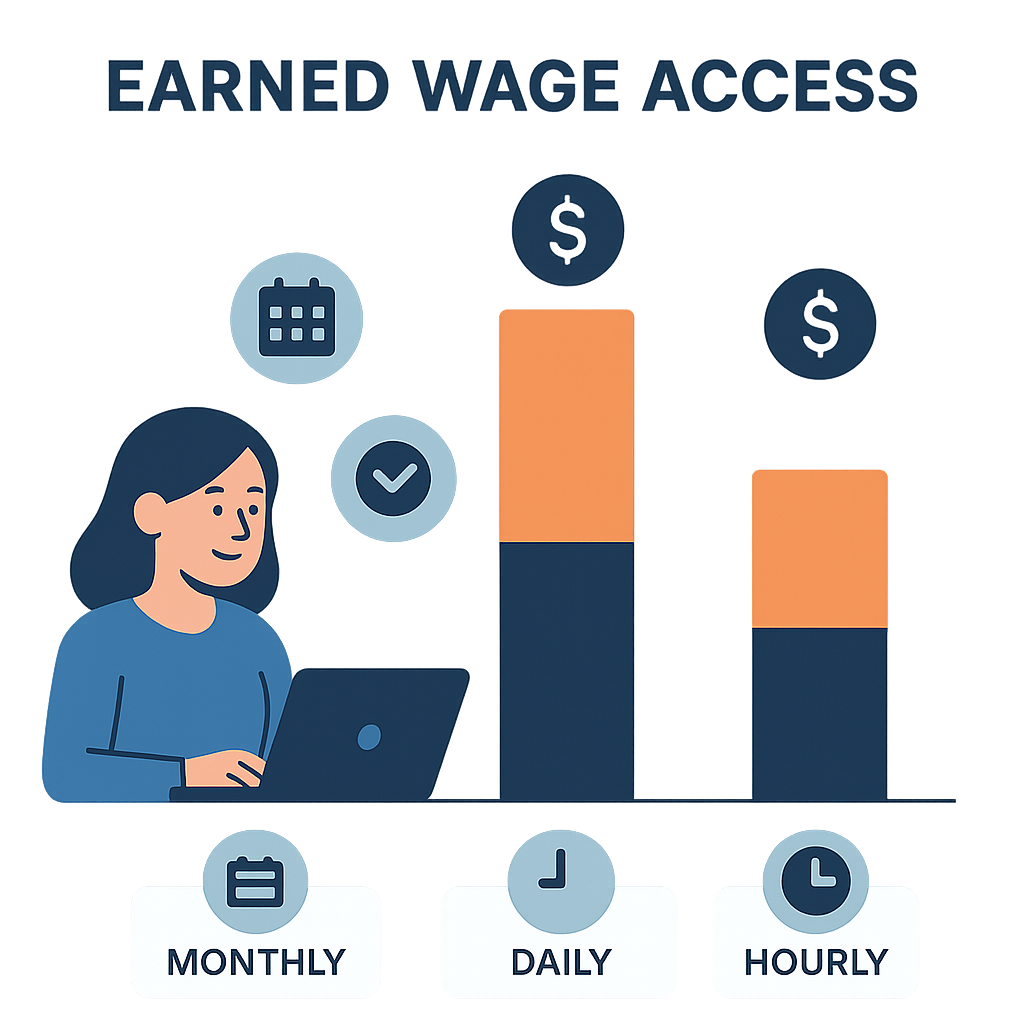
| Criteria | Monthly Wage | Daily Wage | Hourly Wage |
|---|---|---|---|
| Calculation Unit | Month | Day | Hour |
| Key Data | Work period/month and attendance | Number of working days | Number of working hours |
| Common Legal Payment Period | Month or half-month | After day or lump-sum within limits | After hour or lump-sum within limits |
| Suitable for | Stable, long-term jobs | Jobs managed by day/shift | Flexible hourly jobs |
| Data Risk | Incorrect working days, leave | Incorrect day/shift definition | Incorrect clock-in/out, break time |
| Must Specify | Cycle, standard attendance, entitlements | A working day, shift, rest day | A working hour, break, overtime |
No form is inherently “better.” The suitable form depends on the job nature, timekeeping system, management capability, and lawful agreement.
Wage Payment Period According to Article 97
(Foundation: see What is Wage? Legal Basis and Wage Forms.)
For Hourly, Daily, or Weekly Wage Earners
Employees are paid after the hour, day, or week of work. Parties can agree on lump-sum payments but must be paid lump-sum at least once every 15 days.
For Monthly Wage Earners
Employees are paid once a month or twice a month. The payment time must be determined cyclically and announced to the employee.
For Product or Contract-Based Wages
The payment period is agreed upon by the parties. For work lasting several months, monthly advances must be made based on the work volume completed in the month.
This is why “daily wage” and “daily payment” are not always the same.
Can Monthly Wages Be Converted to Daily Wages?
Conversion may be needed for some management or regime calculation purposes, but a single formula should not be used for all cases.
An internal reference calculation often takes the form:
> Daily Reference Rate = Related Monthly Wage ÷ Number of Normal Working Days Determined for the Month/Period
However, before applying, consider:
- What does the “related monthly wage” include?
- According to which calendar are normal working days determined?
- Is the purpose to calculate leave, absence, Earned Wage Access, or overtime?
- Are there any specific regulations governing this?
- What do the contract and regulations say?
Do not use this reference formula to replace legal formulas for overtime, night work, leave, or allowances.
Can Daily Wages Be Converted to Hourly Wages?
From a management perspective, the daily rate can be divided by the normal working hours of that day if the contract/regulations allow and the purpose is correct. But work shifts, break times, and specific regulations must be considered.
Example: if the rate is 320,000 VND/day corresponding to 8 normal working hours, the reference rate is 40,000 VND/hour. This is just an illustrative example, not automatically the overtime rate.
Why is Actual Pay Different from Agreed Wage?
Actual pay may be affected by:
- Actual working days/hours;
- Paid or unpaid leave;
- Overtime;
- Night work;
- Allowances and additional payments;
- Bonuses;
- Insurance and tax obligations;
- Lawful deductions;
- Previously received wages.
Employers must provide a payroll statement showing wages, overtime, night work pay, and deduction details if any.
How to Choose the Right Wage Form
Monthly Wage is Suitable When
- The job is stable;
- Tasks are continuous;
- The company manages by position/title;
- Payroll runs on a monthly cycle;
- Working hour fluctuations are not the sole determinant of job value.
Daily Wage is Suitable When
- Labor volume is managed by day/shift;
- Employees change work schedules;
- Working days can be clearly confirmed;
- The company needs to allocate costs by day;
- Agreement and payment period comply with the law.
Hourly Wage is Suitable When
- Work schedule is flexible;
- Shifts are short or incomplete days;
- Accurate time recording devices are available;
- Work can be valued by the hour;
- Clear break time rules are in place.
Common Mistakes
Confusing Wage Form with Payment Period
This is the most common mistake. A daily unit does not require the company to transfer money daily.
Dividing Monthly Wage by 30 in All Cases
Do not do this. The number of days used for conversion depends on the purpose, working regime, calendar, and applicable regulations.
Using Basic Hourly Wage for Overtime Pay
Overtime and night work pay have specific formulas and rates. Do not simply multiply the regular hourly rate by the additional hours.
Not Defining a Working Day
Companies need to clarify full shifts, half shifts, night shifts, late arrivals, early departures, and break times.
Using Monthly Minimum Wage for Hourly Wage Earners Without Checking Conversion
The minimum may be stipulated monthly and hourly. Check the effective documents and correct region.
“Daily Wage” vs. Earned Wage Access by Nhan Kiet
(Learn about the product: see What is Daily Wage? Official Guide.)
| Content | Daily Wage | Earned Wage Access by Nhan Kiet |
|---|---|---|
| Nature | Time-based wage unit | Solution for accessing earned wages |
| Where is it? | Wage contract/agreement | Welfare-payroll operating system |
| Who can use it? | Those with a daily wage agreement | Employees in activated and eligible units |
| Does it change the pay period? | Pay period according to Article 97 | Does not automatically change the pay period |
| Determination Method | Daily rate × paid days | Approved work × configured rate − received − forecast |
Monthly wage earners can still use Earned Wage Access if the program applies. The system uses the client's daily rate to determine the eligible portion, but this does not automatically convert the contract to daily wage payment.
Earned Wage Access Example for Monthly Wage Earners
Suppose a person earns a monthly wage, working at a client with Earned Wage Access enabled. The system has a configured daily rate and records 7 approved workdays.
The amount that can be received is calculated from approved workdays, minus the amount already received and forecasted. The employee chooses to receive a portion via VPBank. At the end of the period, payroll still settles the total monthly wage according to the contract; the amount received is deducted from the remaining payable amount.
Therefore:
- The contract form remains monthly wage;
- The pay period remains as agreed;
- Earned Wage Access only changes the timing of accessing a portion of eligible wages;
- Total income does not automatically increase by using the application.
What Should Companies Clearly State?
- Wage form;
- Wage level and components;
- Unit of month/week/day/hour;
- Normal working hours;
- Payment period and date;
- How attendance is recorded;
- Rules for night shifts, short hours, overtime;
- Allowances and additional payments;
- How to provide payroll statements;
- Mechanism for early access to part of wages if any;
- How to deduct previously received amounts;
- Complaint channels and processing time.
What Should Employees Ask Before Signing a Contract?
- Is the rate in the contract monthly, daily, or hourly?
- How many hours are worked each day/week?
- What is the payday?
- How is a day off calculated?
- How is overtime or night shift calculated?
- Which allowances are fixed, which are conditional?
- When is the attendance finalized?
- Who resolves attendance errors?
- Is there a payroll statement?
- If using Earned Wage Access, where is it reflected at the end of the period?
Frequently Asked Questions
Does Daily Wage Mean Payment Every Day?
No. Daily wage is a unit for determining wages. Parties can agree on lump-sum payments but must comply with Article 97.
Does Monthly Wage Mean Receiving the Same Amount Every Month?
Not necessarily. Actual receipt depends on attendance, leave, overtime, allowances, bonuses, insurance, tax, and deductions.
Can Hourly Wage Be Lower Than Minimum Wage?
The pay rate must meet the applicable minimum wage regulations. Check the minimum hourly rate and region at the time of payment.
Is Dividing Monthly Wage by 26 Always Correct?
No. This may be a conversion method in some work schedules or regulations, but it is not a formula for every month, company, and purpose.
How Do Daily Wage and Product Wage Differ?
Daily wage is based on daily working time. Product wage is based on the quantity and quality of products according to standards and rates.
Can Monthly Wage Earners Use Earned Wage Access?
Yes, if the unit is activated and the employee is eligible. Using the solution does not automatically change the wage form in the contract.
Does Earned Wage Access Pay the Entire Wage Daily?
No. The system allows receiving a portion from approved work within limits, then settles the remaining part according to the period.
Conclusion
Monthly, daily, and hourly wages are all time-based pay forms but differ in the unit used to measure working time. The calculation unit is not the payment period, and it does not solely determine the actual receipt.
When applying, companies must clearly state the form, level, working time, payment period, calculation method, and related items. With Nhan Kiet's Earned Wage Access, understand that it is a solution for accessing part of earned wages, not a new contract form.
References
- Labor Code No. 45/2019/QH14 – Government Electronic Information Portal
- Decree 145/2020/ND-CP – Government Electronic Information Portal
---
Author: Nguyen Minh Tuan — Strategy Team Specialist, Nhan Kiet Manpower Supply Co., Ltd.
Earned Wage Access Solution Consultation for Businesses: Hotline 0937.022.655 · Email info@nhankiet.vn · Earned Wage Access for Businesses