
What is employee financial wellbeing?
Employee financial wellbeing is a person's ability to meet current expenses, handle unexpected costs, manage financial obligations, and remain in control of cash flow. A worker on a modest income can be relatively financially healthy when commitments are manageable, the budget is clear, and a buffer exists. A high income alone does not guarantee financial health.
Financial wellbeing is more than “having a lot of money”
Salary is only one part of personal finance. Two people earning the same amount may face very different fixed commitments. Financial wellbeing therefore depends on control of cash flow, not income alone.
A simple definition is knowing where money is, what it must cover, and how to respond when circumstances change.
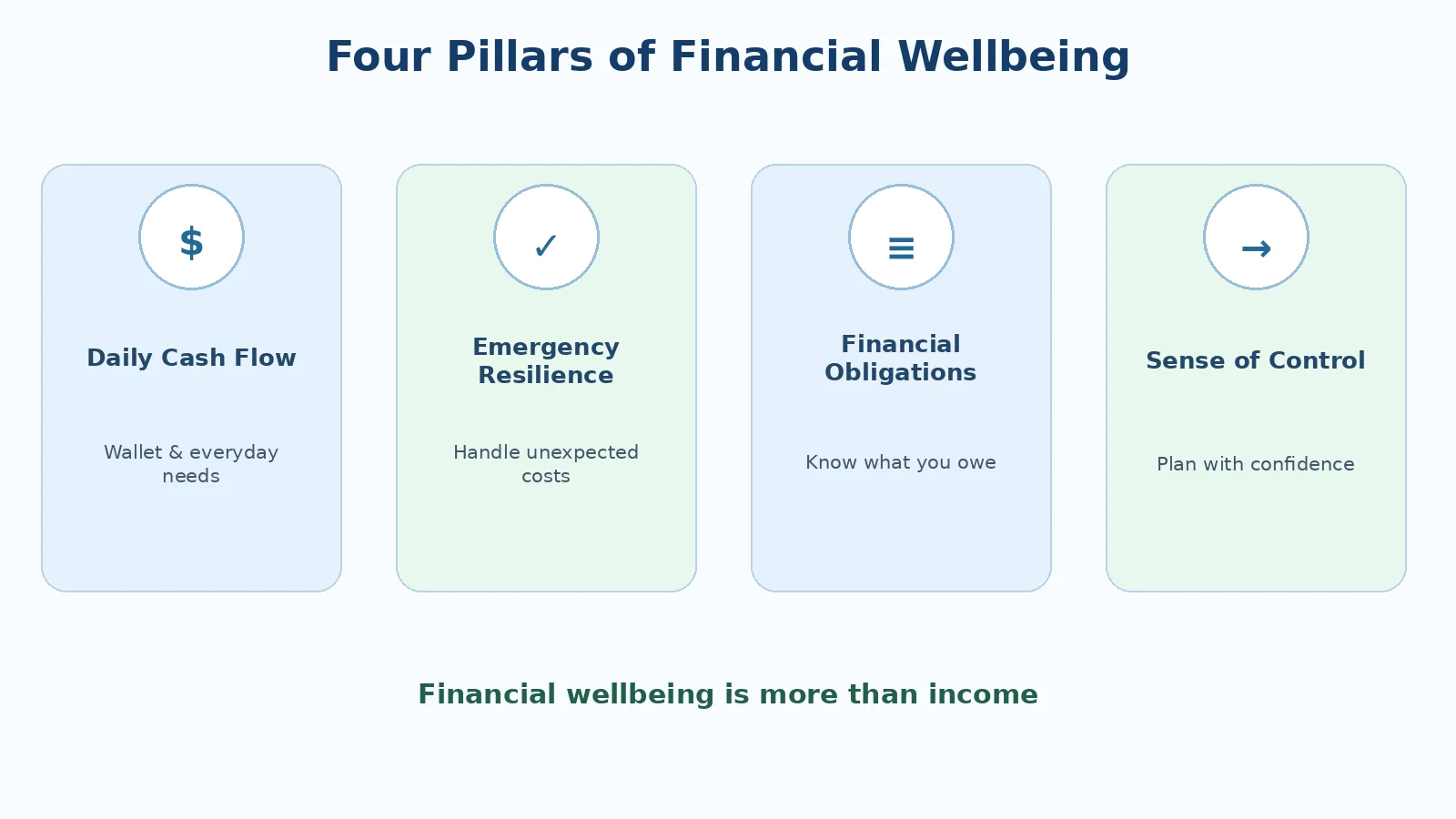
Four pillars of financial wellbeing
1. Day-to-day cash flow
Can the worker cover housing, food, transport, utilities, family needs, and healthcare from one payday to the next? Regularly running out before payday suggests an imbalance.
2. Ability to handle unexpected costs
A vehicle repair, medical visit, or urgent bill can disrupt a budget without a buffer. Better health does not require a large fund immediately; it means an incident can be handled without destroying the whole month's plan.
3. Ability to manage financial obligations
Workers should know what is owed, due dates, total fixed commitments, which payments can change, and which are mandatory. Without that view, budgeting becomes guesswork.
4. Sense of control
Control includes knowing this week's spending limit, the next bills, which source covers an emergency, when to wait, and where to seek help. Clarity reduces rushed decisions under stress.
Signs of relatively sound financial wellbeing
There is no universal score, but these are useful positive signs:
| Sign | Meaning |
|---|---|
| Knows monthly fixed costs | Planning is easier |
| Uses a weekly or pay-cycle budget | Cash flow is easier to control |
| Pays priority bills on time | Extra pressure is limited |
| Keeps even a small buffer | Unexpected costs are easier to handle |
| Rarely uses a new source to repay an old one | Shortfall cycles are less likely |
| Understands the effect of early pay access | Early pay is not mistaken for extra income |
| Knows official support channels | Hasty decisions are reduced |
The direction of improvement matters; every criterion need not be met at once.
Signs that cash flow needs review
Warning signs include repeatedly running out before payday, seeking extra funds for essentials for several months, not knowing total monthly payments, a small surprise upsetting the budget, treating early pay as extra income, depending on overtime for fixed bills, delaying necessities, or having no buffer after payday.
These signs are diagnostic, not judgmental. They show that current allocations may need to change.
When several appear together, review the whole budget instead of finding money for one small bill at a time.
How does financial wellbeing differ from saving?
Saving is one component. Someone with little savings may still know all obligations, spend within means, and build a buffer. Someone with high income may remain under pressure if spending exceeds income and debts are unclear.
Financial wellbeing = current cash flow + shock resilience + obligation management + sense of control.
Why does financial wellbeing matter at work?
Employers should respect employees' private finances, yet financial strain can affect commuting, time spent resolving personal issues, payroll questions, advance requests, and stress before bills fall due.
Employers can help through accurate and transparent pay, correct timekeeping, timely approvals, readable payslips, clear support channels, optional education, and controlled flexible tools. The aim is to reduce friction while respecting privacy.
Where does earned wage access fit?
Earned wage access can address part of a timing gap between work already completed and the normal payday. The available amount is based on approved workdays.
Available amount = (approved workdays × daily rate) − amount already received in the period − portion retained under employer policy.
It gives eligible workers earlier access to part of earned pay. It does not increase total income, replace a budget or emergency fund, solve a recurring deficit, or automatically improve financial health. Results depend on use and program design.
Using flexibility while protecting financial health
Useful rules are: access funds only for a specific need; take only the required amount; check the total already received; calculate remaining payday pay; reserve essentials first; avoid covering repeated deficits; and build a small buffer over time.
Flexibility works best when it relieves temporary pressure without creating new pressure at period end.
How can employers help without invading privacy?
Use general mechanisms instead of requesting detailed personal disclosures: explain payslips, publish a process for reporting time errors, train managers on approvals, offer basic budgeting material, identify official support, and let employees choose whether to use flexible tools.
If conducting a survey, collect only necessary data and protect voluntary participation.
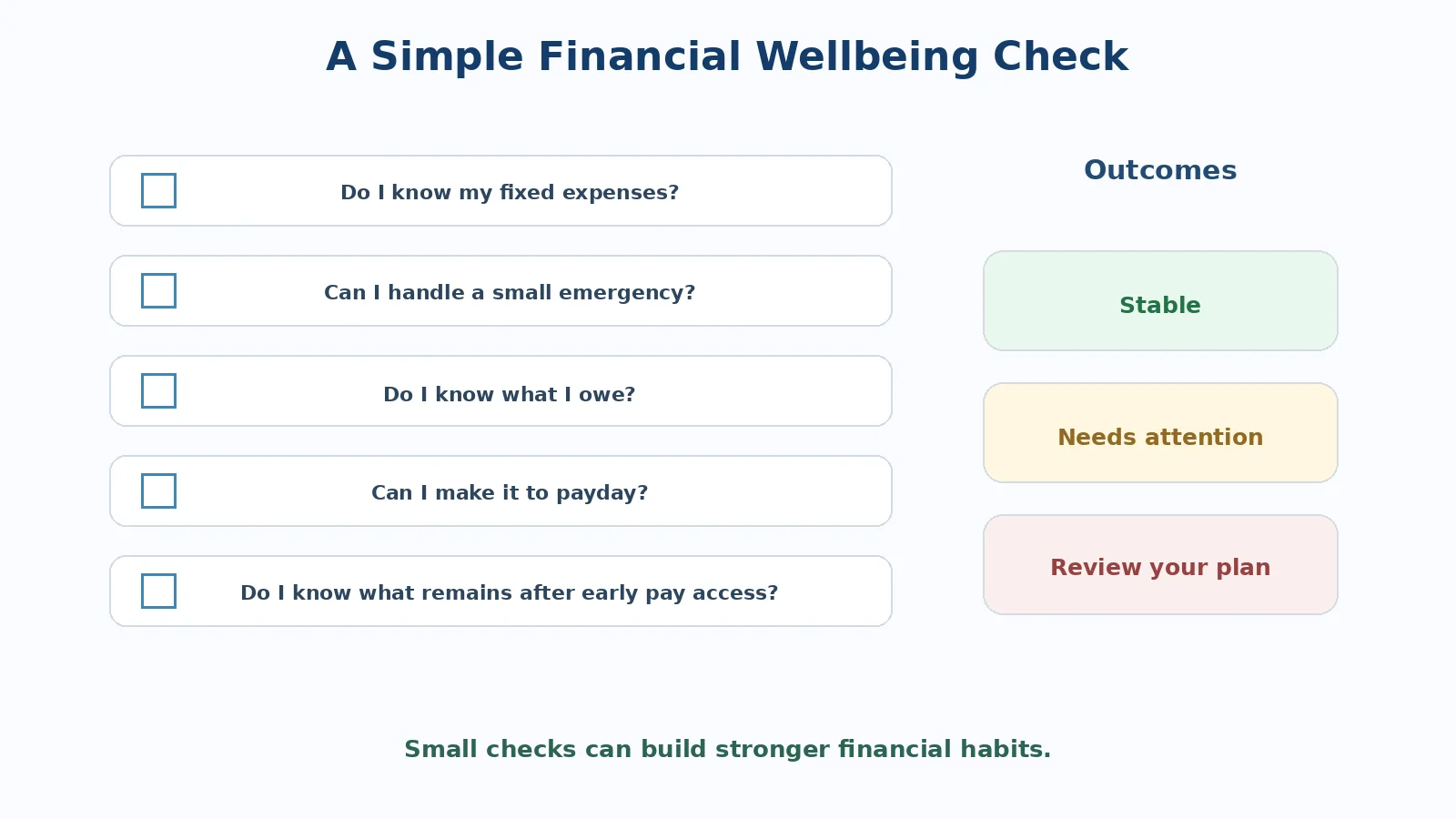
A simple self-assessment
Ask: Do I know mandatory costs for the next 30 days? What source would cover a small surprise? Do I often need money before payday? Do I know the total accessed early this period? Do I have any reserve? After payday, can I still cover basic needs?
The value lies in seeing which area needs improvement, not in answering everything positively today.
Conclusion
Employee financial wellbeing reflects control of cash flow, resilience to surprises, management of obligations, and personal agency. Employers can contribute through accurate, transparent payroll and responsible support tools. Workers can make meaningful progress by identifying payments, budgeting by week, and maintaining even a small buffer.
Author: Do Huy Le — General Director, Nhan Kiet Manpower Supply Co., Ltd.
Earned wage access advice for employers: Hotline 0937.022.655 · Email info@nhankiet.vn · Earned wage access for employers
FAQ
Can a low-income worker have sound financial wellbeing?
Yes, relatively, when obligations are manageable, cash flow is controlled, and a buffer exists.
Does financial wellbeing mean having large savings?
No. Savings are one part; cash-flow and obligation management also matter.
Does receiving pay early improve financial wellbeing?
It can help with a timing mismatch, but it does not automatically improve financial health.
Does an employer need to know how much an employee owes?
Usually no. Employers should minimize data and collect only what a clear purpose requires.