
7 Situations When You Should and Shouldn't Use Earned Wage Access

7 Situations When You Should and Shouldn't Use Earned Wage Access
> Note: This is general financial education content and does not replace personal advice.
Earned Wage Access should be used when it addresses an essential, urgent need or helps avoid larger costs—and the worker has calculated the remaining wages. It should not be used just because the limit is available, for impulsive shopping, or to cover a prolonged negative budget.
Each situation below includes four questions: Is it needed immediately, is there a less impactful alternative, exactly how much is needed, and will there be enough left for the end of the period?
First: Understand the Amount on the Screen
(See also: How Much is Left at the End of the Month After Using Earned Wage Access? and What is a Reserve Hold?.)
Earned Wage Access calculates the amount that can be accessed from work already done and approved, minus what has been accessed and any reserve hold. This is not a bonus or new income. If you access 500,000 VND today, the amount paid at the end of the period will decrease accordingly before other settlements.
Situation 1: Repairing a Vehicle to Continue Working — Often Worth Considering
Context
The vehicle breaks down mid-period, repair costs are 600,000 VND, and there is no alternative transportation. Not repairing would mean missing work or incurring higher travel costs.
Decision Process
- inquire about the cost and repair only the necessary parts first;
- check the emergency fund;
- if short, access only the shortfall from eligible wages;
- record 600,000 VND in the budget;
- reduce flexible spending in the following weeks.
Why It May Be Appropriate
This expense helps maintain income-generating capability. However, do not access 2 million VND just because the system allows it if only 600,000 VND is needed.
Situation 2: Buying Medicine or Immediate Medical Expenses — May Be Necessary, But Seek Full Support
Context
The worker or a dependent needs medicine or an urgent examination; the bill arrives before payday.
Decision Process
- confirm the urgency level with the healthcare provider;
- check insurance/benefits;
- use the emergency fund if available;
- access eligible wages for the remaining amount;
- for large amounts, inquire about payment plans and other legal sources.
Earned Wage Access is more suitable for small/shortfall amounts; do not delay emergency care just to compare finances.
Situation 3: Rent or Utility Bills Due Before Payday — Consider After Negotiation
Context
Due date is a few days before payday; delays may incur fees or affect living conditions.
Decision Process
- ask if the payment date can be changed/delayed by a few days;
- compare the consequences of delaying;
- check the budget and funds;
- if accessing early, allocate the exact amount for the bill immediately;
- adjust the remaining amount at the end of the period.
If this repeats every month, a sustainable solution is to change the bill date if possible or create a bridge fund, not just continuously accessing early.
Situation 4: Buying a Phone/Items Due to a Promotion — Usually Not Recommended
Context
The product is not truly needed, but the advertisement says “only today” and the app shows the available amount.
Handling
- wait 24–48 hours;
- ask if the current item is still usable;
- calculate the post-promotion price with the end-of-period wages;
- set up a separate shopping fund;
- do not consider the limit as surplus money.
Promotions only save money if the item was already planned and does not deplete essential spending.
Situation 5: Attending Parties, Entertainment, or Shopping to “Keep Up with Friends” — Should Not Be Used Frequently
Social spending can be important, but do not trade off rent, food, or transportation to work. You can:
- set a flexible envelope limit;
- choose less costly options;
- clearly state financial capability;
- postpone if the weekly budget is exhausted.
If used, it must be an amount already in the budget, not because “it's not payday yet so I'll withdraw temporarily.”
Situation 6: Paying Another Loan App — Need to Stop and Review All Debts
(See also: Should You Use Earned Wage Access or Consumer Loans? and How to Avoid Loan Sharks.)
Context
The worker intends to use Earned Wage Access to pay a due loan, but plans to borrow again next period for living expenses.
Risks
Earned Wage Access can reduce a specific debt but does not eliminate the cycle if total obligations exceed income. Accessing early reduces the end-of-period wages, potentially leading to further borrowing.
Recommended Actions
- list all debts, balances, interest/fees, due dates;
- prioritize protecting essential needs and avoiding severe consequences;
- do not borrow from a new app to pay an old one;
- negotiate with legitimate lenders;
- seek appropriate advice/support;
- report to the police if there is loan sharking, threats, or extortion.
There is no universal debt repayment order for all cases.
Situation 7: Family Emergency with Unclear Total Costs — Access Step by Step
Context
Need to urgently return home or handle family matters, but costs are not yet determined.
Decision Process
- calculate the minimum cost for travel and immediate needs;
- do not access the maximum “just in case” if not needed yet;
- use the emergency fund first;
- if using Earned Wage Access, access according to clearly identified needs;
- reserve a portion for the remaining days;
- update the budget when actual costs are known.
In stressful situations, breaking decisions into smaller steps helps avoid accessing too much.
Summary Table of 7 Situations
Summary Table of 7 Situations
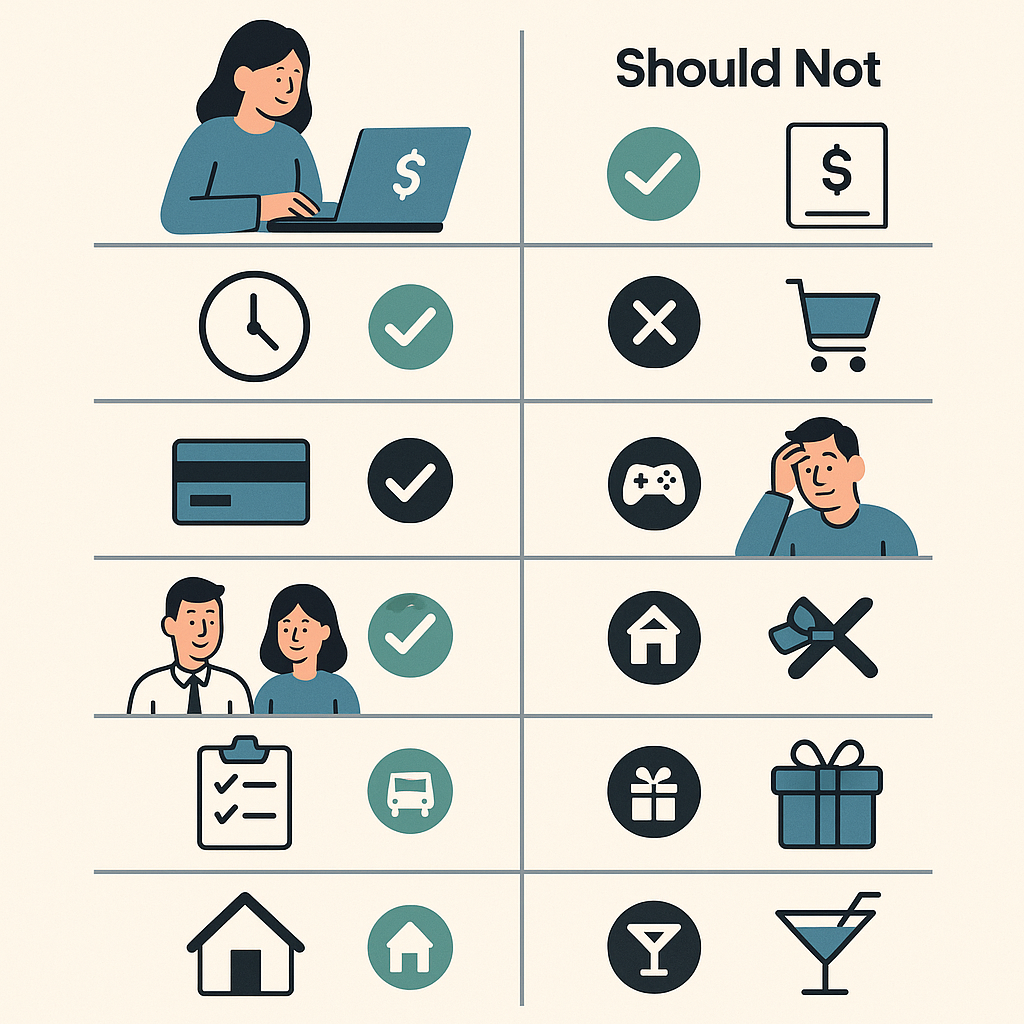
| Situation | Consideration Level | Key Conditions |
|---|---|---|
| Vehicle Repair for Work | Worth Considering | Exact amount needed, protect income |
| Immediate Medical Needs | Worth Considering | Combine insurance/funds/support |
| Essential Bills | Consider | Compare delay and consequences |
| Buying Due to Promotion | Usually Not | Wait and plan |
| Social Spending Over Budget | Not Recommended | Do not use essential funds |
| Paying Another Loan App | High Alert | Review all debts, avoid borrowing cycle |
| Family Emergency with Unclear Costs | Step by Step | Access only identified amounts |
60-Second Check Before Confirming
60-Second Check Before Confirming
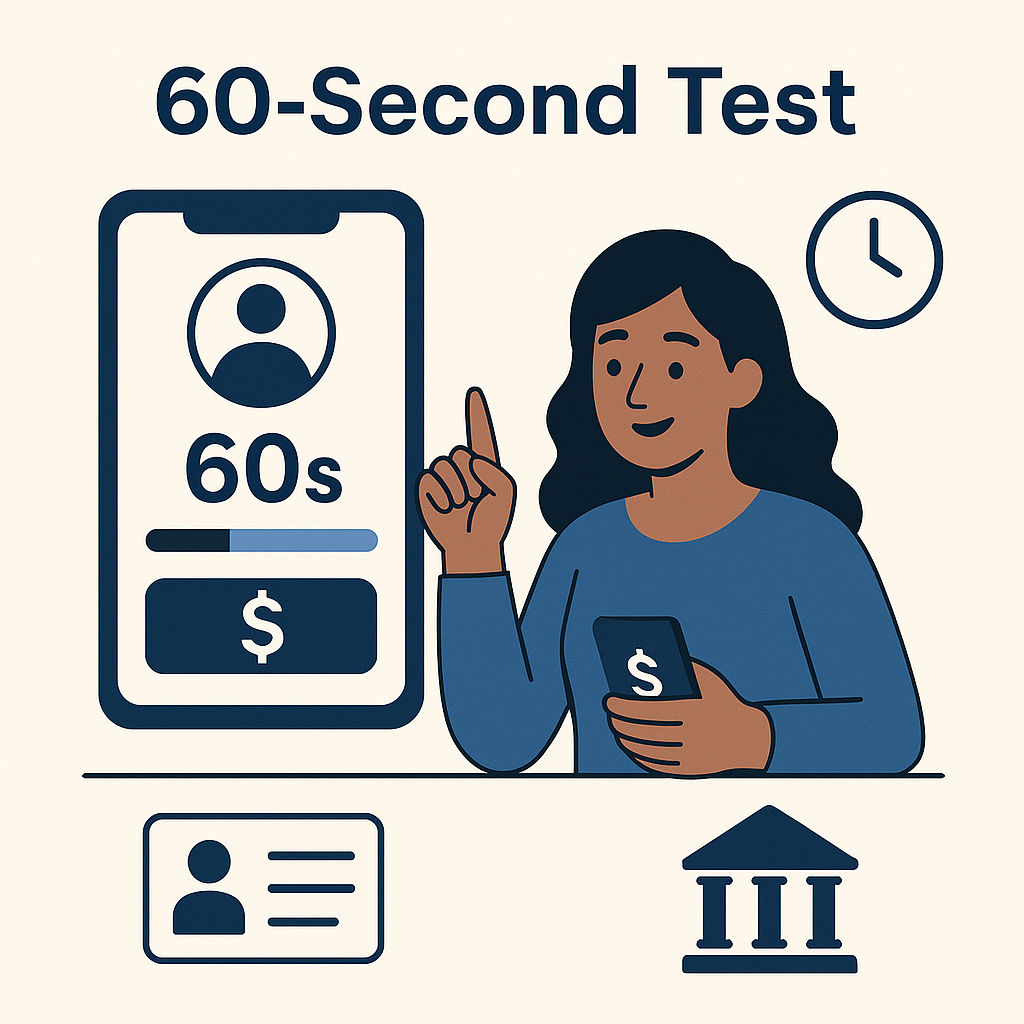
Score one point for each “yes”:
- Is the expense essential or protecting income/health?
- Does it need to be addressed before payday?
- Is there no less impactful source?
- Do I know the exact shortfall?
- Has the work generating the amount been approved?
- Have I calculated the remaining wages?
- After accessing, will essential expenses still be covered at the end of the period?
- 6–7 points: Consideration is justified;
- 4–5 points: Further review needed;
- 0–3 points: Stop and explore other options.
This is a thinking tool, not a credit assessment or mandatory advice.
Principle of “Accessing the Exact Shortfall”
For example, a bill of 900,000 VND, with 400,000 VND already available and an emergency fund that can provide 200,000 VND. The real shortfall is 300,000 VND, not 900,000 VND.
Accessing the exact shortfall helps:
- preserve wages for the end of the period;
- reduce the chance of spending spreading to other areas;
- avoid forming a habit of using up the limit;
- easily align purposes with the budget.
If Accessed but Plans Change
If the expense is no longer needed:
- do not attempt to return it through unknown accounts;
- keep the money in the budget for essential needs;
- consider it still as wages already accessed;
- do not spend just because the money is available;
- reconcile with the payslip at the end of the period;
- consult official channels if you want to handle the transaction according to the process.
Signs to Temporarily Stop Using
(See also: Rights and Responsibilities When Using Earned Wage Access.)
- access immediately whenever the amount increases;
- cannot remember the total accessed;
- remaining amount is insufficient for rent/food;
- used to pay off debt and then borrow again;
- hide transactions from the shared family budget;
- feel anxious or out of control;
- use multiple cash advance/loan apps simultaneously.
Pausing is not a failure. It's time to set a weekly budget, build a small fund, and seek support if needed.
Employers Should Support Without Judgment
- clearly display “accessed – remaining” amounts;
- provide a checklist before transactions;
- avoid using push notifications;
- allow workers not to use it;
- separate usage data from performance evaluations;
- provide FAQs and financial education;
- offer secure support channels;
- do not label frequent users as undisciplined;
- measure causes at an aggregate, voluntary level.
Frequently Asked Questions
Should Earned Wage Access be used for all emergencies?
No. Check emergency funds, insurance, the possibility of delaying expenses, and remaining wages. Large needs may require other solutions.
Is accessing the maximum more beneficial?
No. The unused portion should be reserved for the end of the period; the limit is a ceiling, not a target.
Can it be used to pay off debt?
It can address a due payment but must consider the entire debt cycle. If it leads to borrowing again for living expenses, another plan is needed.
Is using it once a month concerning?
Cannot conclude just from frequency. Consider the purpose, percentage of wages accessed, remaining amount, and whether usage repeats due to lack of structure.
Does Earned Wage Access replace an emergency fund?
No. A fund is accumulated savings; Earned Wage Access is wages already earned accessed early, reducing the remaining amount to be paid.
Conclusion
Earned Wage Access should be used when the expense is truly necessary, the amount is determined, and the end-of-period budget remains stable. It should not be used just because it is available. Remember four key points: right purpose – right time – right amount – know the remainder.
References
- Consumer.gov: Making a Budget
- CFPB: Emergency fund guide
- Ministry of Public Security: Beware of Online Loan Apps
---
Author: Nguyen Minh Khang — Strategy Team Specialist, Nhan Kiet Manpower Supply Co., Ltd.
Earned Wage Access Solutions for Businesses: Hotline 0937.022.655 · Email info@nhankiet.vn · Earned Wage Access for Businesses