
How to build an emergency fund on a limited income
Workers with limited income can still begin an emergency fund with a very small amount. The first goal need not equal several months of pay. A practical start is a buffer for one small surprise, followed by gradual milestones as circumstances allow.
A small emergency fund still has value
A small reserve can cover a vehicle repair needed for work, medicine, a higher bill, a family issue, or urgent travel. Waiting until there is plenty left over often delays the start.
The key is to set aside money before it is spent elsewhere.
Start with a goal below one month of expenses
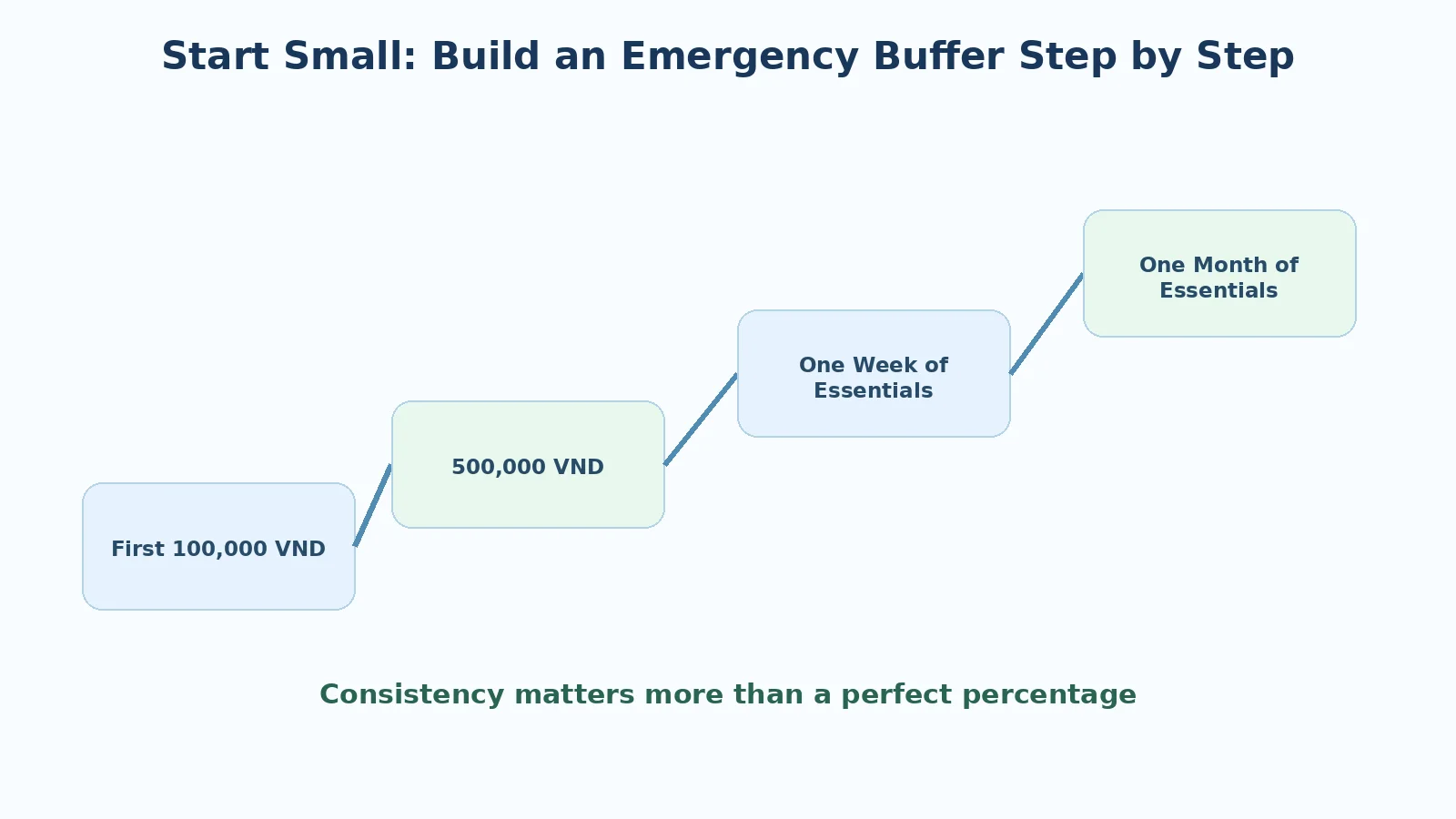
Use four realistic stages.
| Milestone | Target |
|---|---|
| Stage 1 | 100,000–300,000 VND |
| Stage 2 | 500,000–1,000,000 VND |
| Stage 3 | One week of essential spending |
| Stage 4 | One month of essential spending |
If money is very tight, even 50,000 or 100,000 VND is a valid start, provided food, housing, and transport remain protected.
How to find a small amount to keep
Combine weekly leftovers, part of overtime after receipt, cancelled purchases, refunds, a small fixed payday amount, and unused flexible spending. Saving 30,000 VND each week produces about 120,000 VND in a month.
The “set aside first, spend later” rule
On payday, protect housing and mandatory bills, transfer a small amount to the fund, then divide the rest into weekly spending. Keep the fund separate from daily money.
When should saving not be forced too far?
Do not build the fund by skipping necessary medicine, harming nutrition, losing transport to work, delaying housing payments, or borrowing only to deposit into the fund. If the budget is negative, stabilize essentials first.
How to make a 90-day plan
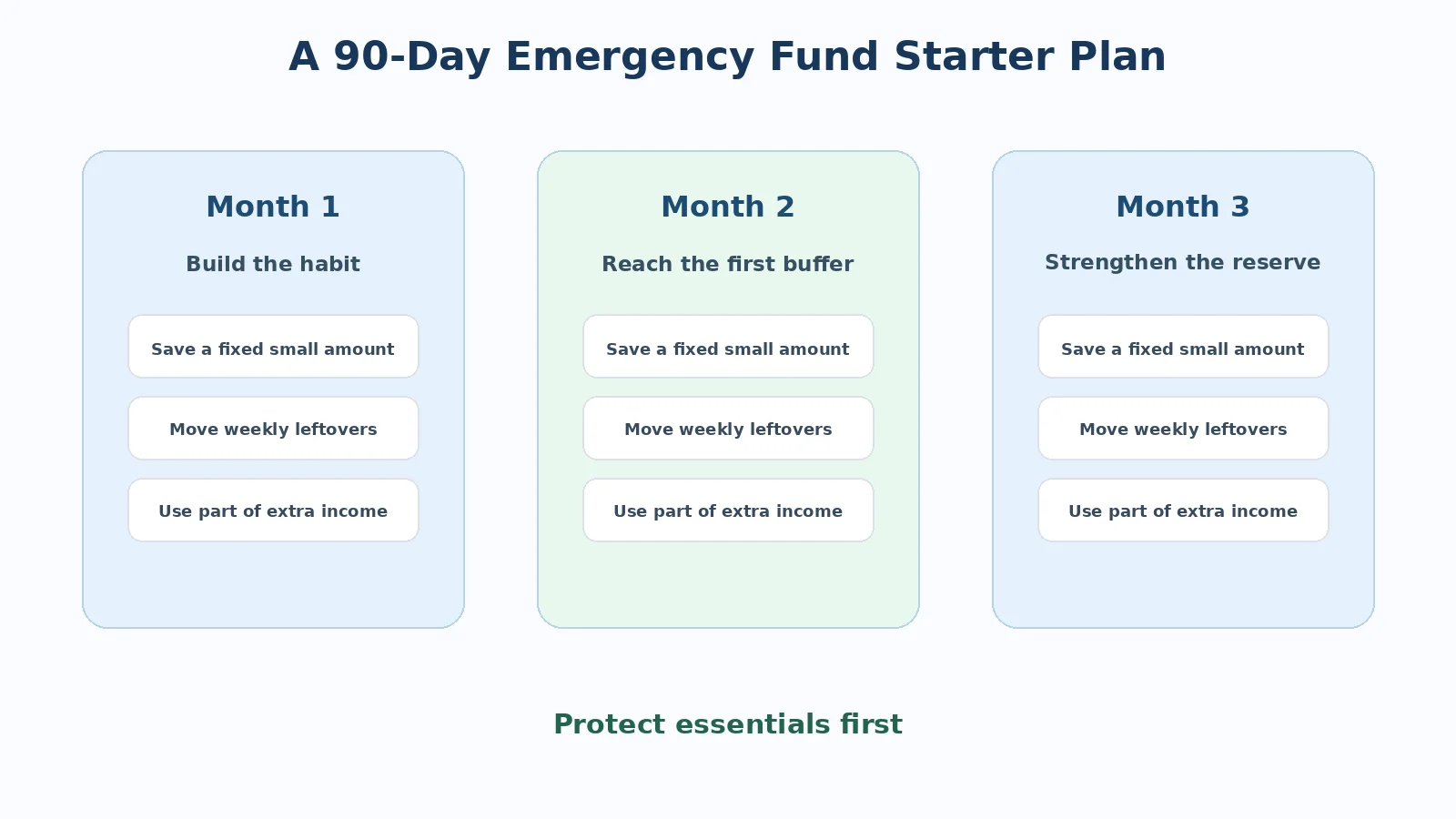
A short plan is often easier to maintain.
Month 1
Build the habit: set aside 50,000–100,000 VND on payday and move weekly leftovers to the fund.
Month 2
Aim for 300,000–500,000 VND. Keep the fixed transfer and add part of overtime only after receiving it.
Month 3
Move toward 500,000–1,000,000 VND. Review flexible spending and retain any surplus.
How is an emergency fund different from earned wage access?
The fund contains money accumulated in earlier periods. Earned wage access gives eligible workers earlier access to part of pay already earned from approved workdays.
| Aspect | Emergency fund | Earned wage access |
|---|---|---|
| Comes from | Previously saved money | Part of earned pay |
| Effect on payday pay | None | Early amount is settled |
| Used for | Unexpected events | Cash-flow timing gaps |
| Limit | Amount accumulated | Approved work, prior access, retained portion |
The two tools can complement each other, but they are not substitutes.
What should happen after the fund is used?
Using it for the intended purpose is not failure. Record the amount and cause, set a replenishment goal, return to a small contribution if needed, and avoid refilling it so fast that the new monthly budget becomes short. The cycle is: save, use when needed, rebuild.
Conclusion
With limited income, an emergency fund should begin small, regular, and realistic. Protect essentials first, transfer a modest amount on payday, and increase the target by stages as conditions improve.
Author: Do Huy Le — General Director, Nhan Kiet Manpower Supply Co., Ltd.
Earned wage access advice for employers: Hotline 0937.022.655 · Email info@nhankiet.vn · Earned wage access for employers
FAQ
Should a low-income worker build an emergency fund?
Yes, starting very small if essential needs remain covered.
Must the fund equal several months of salary?
No. A small achievable milestone is more useful than an unreachable target.
How much should be set aside each month?
There is no universal percentage. Choose an amount that can be sustained without missing essentials.
Is a fund still needed when earned wage access is available?
Yes. The fund is accumulated money; earned wage access is pay received earlier.