
When to Opt for Early Wage Access? Responsible Earned Wage Access Usage Principles
When to Opt for Early Wage Access? Responsible Earned Wage Access Usage Principles
Workers can consider early wage access through earned wage access when an essential expense arises before payday, the money received comes from work already done and approved, and the remaining salary is still sufficient for upcoming obligations. It is not advisable to use up the limit just because the app allows it, for impulsive spending, risky investments, or continuous withdrawals to cover a recurring shortfall without a plan for adjustment.
> Note: This article provides general cash flow management principles and does not replace financial advice for individual circumstances. The configuration values and policies of earned wage access may be updated by Nhan Kiet; users should read the information displayed on the app at the time of the transaction.
In Brief
Earned wage access changes the timing of receiving a portion of wages already earned, not increasing total income.
The limit is the amount the system allows to be received at that time, not the amount workers should use up.
A reasonable transaction should address a specific need and not severely deplete the budget from now until the next payday.
If you need to access wages early almost every period for the same recurring expense, it may be a sign that you need to rearrange payment dates, budget, or seek appropriate support.
Do not give your account, password, OTP, ID card, or phone to others to withdraw on your behalf.
1. What is Early Wage Access?
(Basic concept: see What is Approved Work?.)
In the verified earned wage access model, workers can only receive money based on workdays already completed and approved. The system blocks today’s unfinalized and future days, then calculates the available amount based on work, customer’s daily rate, amount already received in the period, and reserved amount.
Workers proactively choose whether to access wages early. Each request requires users to confirm it is an advance based on estimated workdays and will be reconciled into the salary.
The most important thing to understand:
> Receiving early today means the amount transferred on payday will decrease accordingly, as part of the salary has been paid in advance.
This is not “extra bonus money,” nor is it a new income. Therefore, the decision to access wages early should be viewed as a decision to allocate cash flow between two points in time.
2. When to Consider Early Wage Access?
There is no one-size-fits-all list. However, some situations are more suitable if the necessary amount is planned and does not disrupt the pay period balance.
Medical or Health Expenses Needing Immediate Attention
For example, purchasing prescribed medication, necessary medical examinations, or travel expenses to care for a family member. Workers should still check insurance, company support policies, and other suitable payment sources before deciding.
Costs to Maintain Employment
Fuel, bus tickets, essential vehicle repairs, or meals to continue getting to work may be reasonable needs. The goal is to protect income-generating ability, not to increase discretionary spending.
Essential Bills Due Before Payday
Electricity, water, rent, or tuition with specific deadlines can create a gap between the due date and payday. Compare the early access amount with the consequences of late payment and the remaining budget.
Unexpected Family Expenses
An essential repair, childcare, or urgent travel may need to be addressed before payday. Access the exact shortfall, not automatically choosing the entire limit.
Avoiding a Risky or Higher-Cost Option
If the alternative is an unclear money source, requires contact access, high fees, or threatens collection, accessing earned wages may be safer. However, users must still check earned wage access terms and should not use a transaction to hide prolonged debt.
Expenses Already in Budget but Misaligned Dates
This is a “timing shortfall,” not an “income shortfall”: the total funds for the period are sufficient, only the income and expense dates do not match. Early access can help smooth cash flow if the worker has calculated the remaining part.
3. When Not to Opt for Early Wage Access?
Just Because the Limit is Available
A limit of 1 million or 3 million VND does not create a need to use it. Without a specific expense, keeping the money until payday often helps workers maintain better financial discipline.
Impulsive Shopping or Entertainment Beyond Budget
Promotions, unplanned dining out, phone upgrades, or emotional spending may bring short-term satisfaction but leave little money for essential needs on payday.
Gambling or Betting
Do not use earned wages to gamble with the expectation of “recovering.” If there are signs of uncontrollable behavior, seek support from a trusted person or appropriate expert.
Risky Investments or Volatile Asset Purchases
Earned wage access limits are not investment capital. Do not access wages early to speculate on stocks, cryptocurrencies, or participate in a promised high-return opportunity, especially when risks are not understood.
Withdrawing or Transferring Money to Unknown Individuals
Do not receive money on behalf of others, do not lend your account, and do not transfer following instructions from someone claiming to be support staff. The standard money transfer flow is into a verified VPBank account in the worker’s name.
Work Under Dispute or Likely to be Adjusted
If the worker knows the shift is incorrect, leave not updated, or work just adjusted, request verification first. Work adjusted after approval will revert to pending and may change the eligible amount.
Unaware of Remaining Salary at Period End
If the worker cannot list the expenses until the next payday, accessing the maximum limit may leave insufficient funds immediately after payday.
Repeatedly Using to Pay a Fixed Shortfall
If every month requires early access to pay the same bill, the issue may lie in the income-expense structure or due date. Earned wage access helps with timing but does not inherently increase income or eliminate deficits.
Recently Changed Account Information or Suspected Account Compromise
When the phone, SIM, password, or bank account shows unusual signs, stop transactions and contact support. Do not follow requests from callers asking for OTP or ID card photos.
Previous Transaction Pending
Do not press again multiple times without knowing if the previous transaction succeeded or failed. The system holds an unclear status for investigation to avoid duplicate charges.
4. 60-Second Check Before Accessing
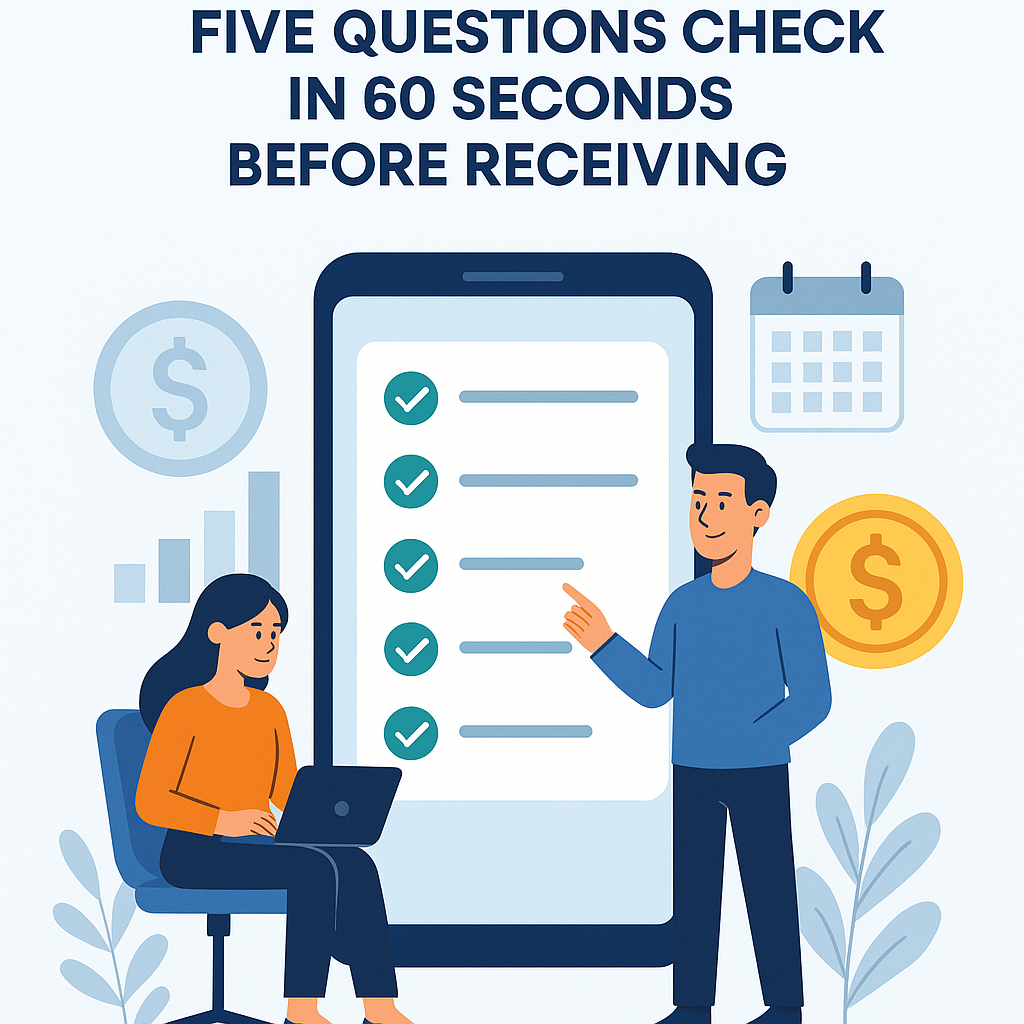
Before confirming, answer these five questions:
What do I need the money for? Can I name the specific expense?
Does this need to be paid before payday? Can it be postponed or split?
How much do I exactly need? Am I choosing the full limit just for convenience?
After accessing, how much will be left on payday? Is there enough for rent, food, transportation, tuition, and other obligations?
Is this an unexpected or recurring situation? If recurring, what will I change in the next period?
Result | Decision Suggestion |
|---|---|
Clearly answered all 5 questions | Can proceed to check work, reserve, and terms |
Unaware of remaining salary at period end | Pause and recalculate budget |
Non-essential, deferrable expense | Consider not accessing |
Used to pay recurring shortfall | Address the cause and seek appropriate support |
Signs of fraud/suspicious account | Stop immediately, contact official channels |
5. Decision Tree “Should I Access?”
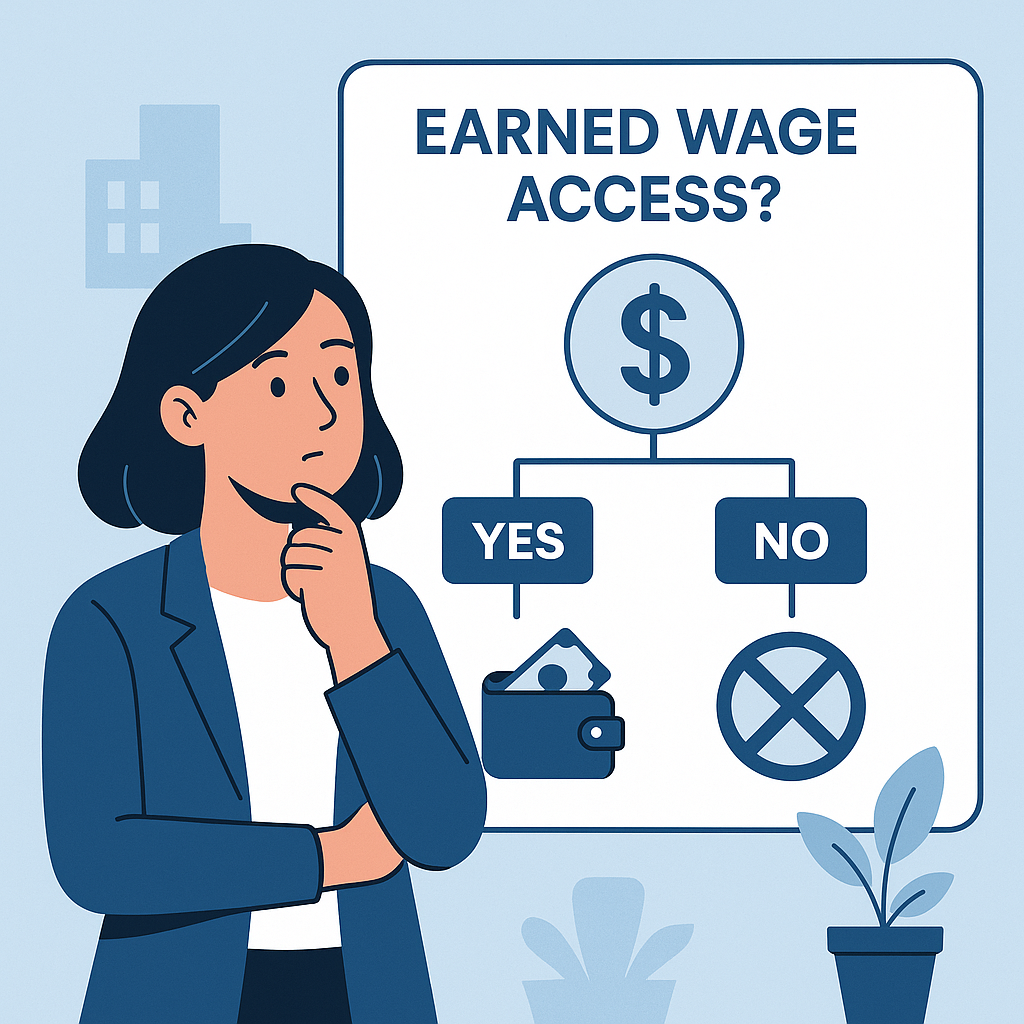
This decision tree does not make the choice for the worker. It helps reduce impulsive decisions and brings safety checks to the right time.
6. Ten Principles for Responsible Earned Wage Access Usage
1. Identify Needs First, Open the App Later
Write down the amount and purpose before checking the limit. This method limits adjusting needs according to the amount the app allows.
2. Access the Minimum Amount Needed
If short 350,000 VND, there is no need to access 1 million VND. The unaccessed portion remains in the final salary and helps protect the budget.
3. Calculate Remaining Amount Until Next Payday
Do not only calculate the end-of-month salary. List all expenses from today until payday and from payday to the next period.
4. Check Approved Work
View each day, customer, and estimated amount. If work is incorrect, resolve before accessing rather than waiting until the end of the period to complain.
5. Understand Reserved Amount
The reserve is not a fee. It is the portion not yet open for early access. Do not try to access the entire estimated work amount.
6. Read Amount Already Accessed in the Period
Many small transactions can add up to a large amount. Do not evaluate based on the most recent withdrawal; look at the total for the entire period.
7. Do Not Share Security Information
Do not provide passwords, OTPs, ID card photos, QR codes, or phone control rights. Do not ask others to hold the phone and operate on your behalf.
8. Do Not Resend When Transaction is Pending
Wait for status or contact support with the transaction code. The system is designed not to guess the result when the bank has not responded definitively.
9. Review Monthly Usage Frequency
High frequency does not automatically mean misuse. But if the number of times and the proportion of early wage access continuously increase, consider it a signal to review the budget.
10. Use Flexibility to Build Financial Resilience
After overcoming a short-term shortfall, try to save a small amount in the next period. The long-term goal is to have a reserve fund, not to rely on early access every period.
7. Limit is Not a Spending Recommendation
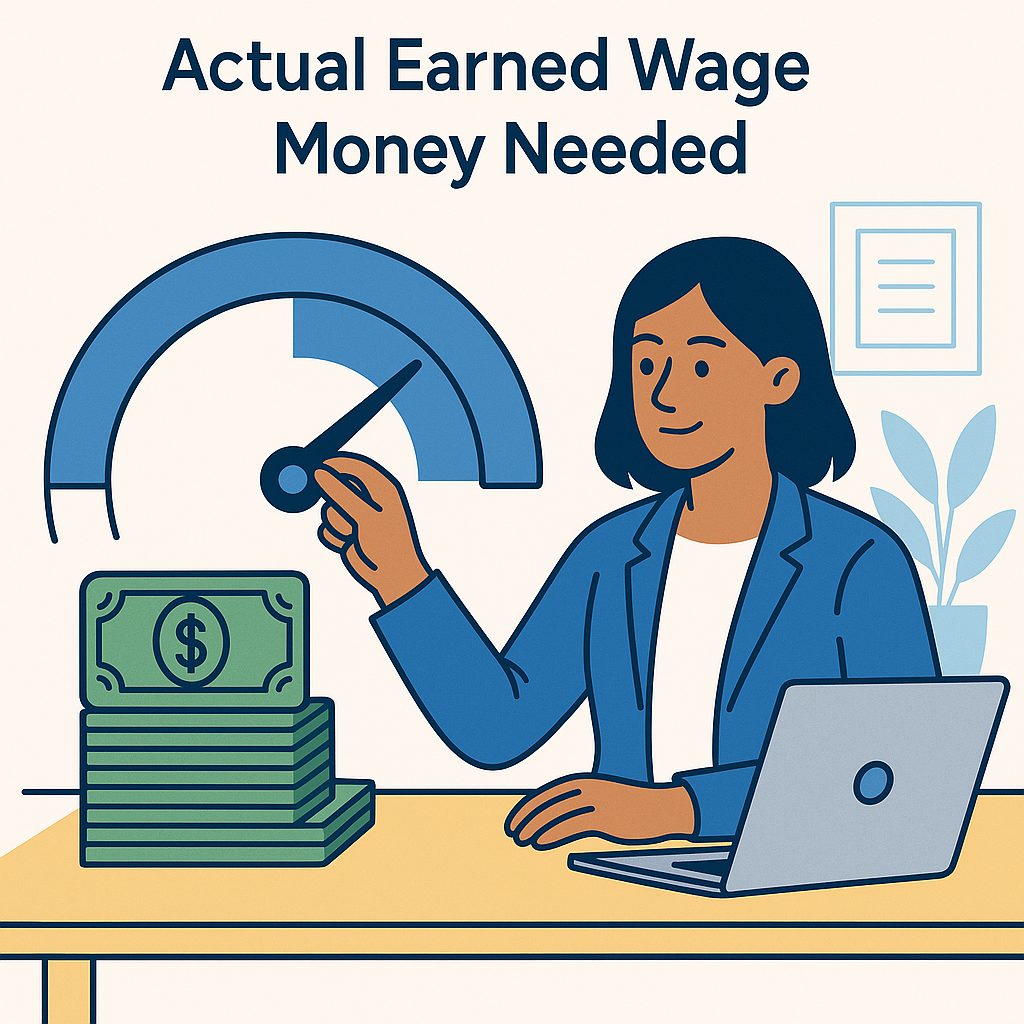
The earned wage access system at the time of verification has default levels:
Limit | Default Value |
|---|---|
Minimum per transaction | 50,000 VND |
Maximum per order | 3,000,000 VND |
Maximum per person per day | 5,000,000 VND |
These are technical controls, not advice that workers should access up to the maximum. Levels may be changed by NK according to customer and operational policy.
For example, a person has 2 million VND available but only lacks 400,000 VND for vehicle repair to get to work. A cautious decision is to consider exactly 400,000 VND and keep 1.6 million VND for the pay period, not viewing 2 million VND as “wasted money.”
8. How to Calculate Remaining Salary Before Accessing
(See details: How Much is Left After Accessing Earned Wage Access?.)
A simple calculation:
Expected Remaining Salary = Expected Net Salary - Total Earned Wage Access Received
Then calculate:
Surplus Until Next Period = Expected Remaining Salary - Upcoming Mandatory Expenses
Illustrative Example
Assume:
expected net salary after finalization: 8,000,000 VND;
already accessed early: 1,500,000 VND;
considering accessing more: 500,000 VND;
rent, food, transportation, and obligations after payday: 5,200,000 VND.
If accessing more, the expected transfer on payday is:
8,000,000 - 1,500,000 - 500,000 = 6,000,000 VND.
The surplus after obligations is:
6,000,000 - 5,200,000 = 800,000 VND.
Workers can use this number to consider. If the expected salary is uncertain or work is pending, use a more cautious scenario.
> Example does not replace payroll. Actual salary also depends on finalized work, overtime, allowances, insurance, taxes, and valid adjustments.
9. Is Frequent Early Access a Concern?
Do not judge solely by usage frequency. Some have sufficient income but rent payment dates misalign with payday. Others need early access due to a short-term medical or family phase.
However, review if one or more signs appear:
using nearly the entire limit in many consecutive periods;
accessing immediately when work is approved without a specific need;
very little money left on payday;
seeking other money sources immediately after payday;
using multiple advance/loan apps simultaneously;
unaware of total fees or obligations;
regular expenses always exceed income;
hiding transactions from family due to worry or shame.
A market report by the U.S. Consumer Financial Protection Bureau (CFPB) notes that advance needs often arise from misalignment between income receipt and expense payment dates, warning of financial strain risks when users simultaneously use multiple products. This is reference evidence from the U.S. market, not a legal conclusion or data for earned wage access in Vietnam.
10. What to Do When Money Shortage Repeats?
Record the Last Three Periods
Only need four columns:
Date | Expense | Essential or Not | Repeated or Not |
|---|---|---|---|
5th of each month | Rent | Essential | Yes |
12th of each month | Electricity/Water | Essential | Yes |
Not fixed | Online shopping | Non-essential | Yes |
Classify Causes
Date Misalignment: total income sufficient but bills arrive early.
Unexpected Expense: medical, vehicle repair, family.
Exceeding Plan: shopping or entertainment.
Income Fluctuation: workdays or overtime changes.
Lack of Structure: regular essential expenses exceed income.
Debt Burden: multiple payments due simultaneously.
Choose Solution by Cause
request payment date adjustment if the provider allows;
divide money weekly upon receiving salary;
set non-essential spending limits;
create a reserve fund from small, regular amounts;
discuss with HR about suitable support policies;
seek reliable advice when debt obligations exceed management capacity;
avoid new loans just to pay old ones without an overall plan.
OECD considers daily financial control, budgeting, spending management, saving, and shock response as important components of financial health and resilience.
11. A Very Simple Budget Plan for Workers by Day
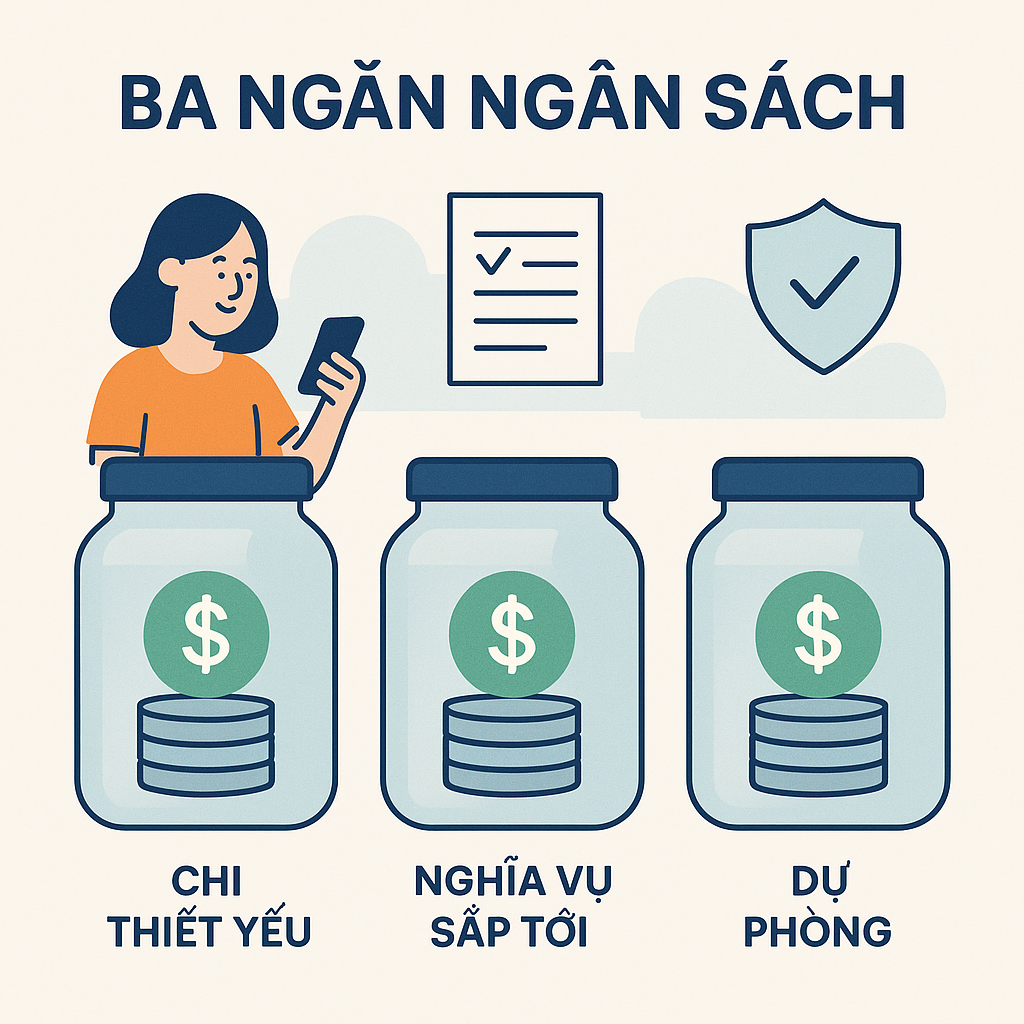
Income for shift or day workers can vary. Use three “compartments” instead of a rigid percentage formula:
Compartment 1: Essential Expenses Until Next Payday
Housing, basic food, transportation, healthcare, education, and mandatory obligations.
Compartment 2: Small Reserve
Start with a sustainable level, even 20,000–50,000 VND per period. Consistency is more important than an overly ambitious goal that leads to giving up.
Compartment 3: Flexible Spending
Only use after the first two compartments are protected. If accessing wages early, prioritize Compartment 1 and avoid increasing Compartment 3.
There is no single ratio suitable for all income levels and family circumstances. The goal is to know where the money is going and not let early access obscure upcoming obligations.
12. Account Safety When Using Earned Wage Access

In the standard flow, money is transferred into a VPBank account in the worker’s name. The system verifies the account holder’s name and locks the account number after verification to reduce the risk of switching to another account.
Suspicious Signs
caller requests OTP reading;
suggests transferring money to an “intermediary account”;
sends strange links to “unlock limit”;
requests ID card photos via unofficial channels;
promises limit increase if fees are paid upfront;
requests installing remote control apps;
asks to receive or withdraw money on behalf.
If encountering these situations, stop actions and contact official support channels. Do not publicly post transaction codes with full account information.
13. System and Business Responsibility
Responsible usage is not only the worker’s responsibility. Businesses and operators must also create an environment that helps users make informed decisions.
Information Must Be Clear Before Transaction
approved workdays;
amount available for access;
total accessed in the period;
reserved amount;
fees if any;
impact on remaining amount at period end;
status and expected processing time;
complaint channels.
Avoid Coercive Design
Do not use fake countdowns, fear-of-missing-out notifications, or default maximum amount selections. Decisions must be made proactively by the worker.
Have Mechanism to Identify Unusual Usage
The system can provide educational warnings when frequency increases, but should not automatically judge, shame, or use data for other undisclosed purposes.
Have Process for Incorrect Work and Pending Transactions
Workers must know if the issue belongs to the customer, NK supervision, Payroll, or payment. A continuous ticket code is better than requiring users to recount multiple times.
14. Does Earned Wage Access Currently Have Fees?
(Why this is not a loan: see Is EWA a Loan?.)
According to the current system flow:
no interest rate;
no fees charged to workers;
accessed amounts are reconciled into salary;
old fee code 1.5%/month remains in test code, not applied in verified real flow.
NK still needs to approve long-term fee policies and determine the party bearing operational costs before using messages like “permanently free.” If policies change, workers need clear notification before confirmation.
CFPB research on the U.S. paycheck advance market shows fees and usage frequency can significantly alter the actual cost of some products. Therefore, the correct principle for any service is to read total costs, not just look at “no interest.”
Frequently Asked Questions
Should I Access Wages Early to Pay Rent?
Consider if rent is due before payday, the total income for the period is still sufficient, and the remaining amount after accessing does not leave other essential needs unmet. If the date misaligns every month, discuss the possibility of changing the payment date.
Should I Withdraw the Entire Available Limit?
Do not do so just because the limit exists. Determine the actual amount needed and keep the rest for the pay period.
Are There Additional Fees for Multiple Accesses?
The current earned wage access flow does not charge workers. However, users must still check the transaction screen and current policy.
Does Early Wage Access Reduce My Salary?
No. The accessed amount is part of the salary paid in advance and is deducted from the remaining amount at period end to avoid double payment. Total salary still depends on finalized work and payroll.
Should I Access Wages Early to Pay Debt?
Consider the entire obligation. An early access amount can address the due date but does not inherently reduce total debt. If borrowing or repeatedly accessing early to roll over debt, seek reliable advice and create an overall plan.
Should I Use Earned Wage Access for Investment?
Do not consider wages needed for living as risky investment capital. Earned wage access is designed to access wages already earned, not guarantee returns from any investment.
Should I Access Before Work is Corrected?
Request correction and re-approval first. Work changes can alter the limit and final reconciliation amount.
Why Not Press Again When Transaction is Pending?
The bank may not have returned a definitive result. Resending risks creating duplicate requests. Use the transaction code to investigate through official channels.
How Do I Know If I’m Dependent on Early Wage Access?
Review the last three periods: is frequency increasing, is the proportion of early accessed wages increasing, and is there enough left on payday for essential expenses? If continuously short for the same expense, address the cause, not just repeat transactions.
Conclusion
Early wage access is most suitable when addressing a short-term timing gap: an essential expense due, work approved, the needed amount clear, and the remaining salary still sufficient for the next period. Do not access due to impulse, use up the limit, risky investments, withdraw for others, or repeat to cover a regular deficit.
The simple principle is: access for the right need, access the minimum necessary, calculate the remaining salary, and protect the account. Earned wage access provides more control over when to receive money; how it is used determines whether that flexibility supports or complicates the worker’s budget.
References
> CFPB sources are used for reference on behavior, costs, and risks in the U.S. market; not for legal conclusions for earned wage access in Vietnam.
---
Author: Nguyen Minh Tuan — Strategy Specialist, Nhan Kiet Manpower Supply Co., Ltd.
Earned Wage Access Solutions for Businesses: Hotline 0937.022.655 · Email info@nhankiet.vn · Earned Wage Access for Businesses
Read more articles
- What Data is Needed to Integrate Earned Wage Access with Timekeeping, Payroll, and ERP? · Doanh nghiệp
- What is the Reserve Hold in Earned Wage Access? Is it a Fee or Lost Money? · Người lao động
- Earned Wage Access Transaction Limits: Minimum, Maximum per Transaction, and Daily Limits · Người lao động
- Does Changing or Losing Your Phone Affect Earned Wage Access? How to Protect and Re-Verify Your Device · Người lao động
- Who is Responsible When Earned Wage Access Errors Occur? · Doanh nghiệp
- 20 Clauses to Check in an Earned Wage Access (EWA) Implementation Contract · Doanh nghiệp
- Who Can Use Earned Wage Access? Registration, Verification, and Receiving Conditions · Người lao động
- How is Earned Wage Access calculated and paid when working for multiple clients? · Người lao động
- EWA for Retail, F&B, and Chain Stores: How to Manage Flexible Shifts? · Doanh nghiệp
- Clocked In but No Workday or Available Limit Increase: Causes and Solutions · Người lao động